Your bag is empty.
Celtic knots, the triquetra and the triskele
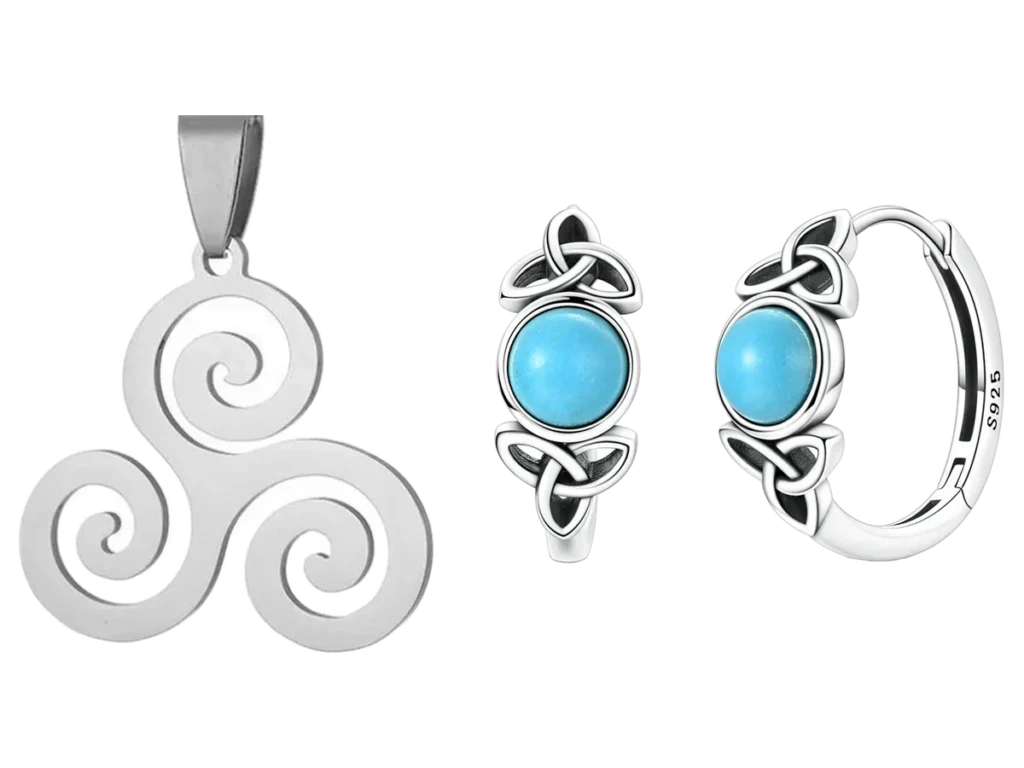
Knotwork, the three-cornered triquetra and the three-armed triskele appear on many of our Celtic pieces. Each has a longer and more surprising history than its name suggests.
The triskele: older than the Celts
The best-known triple spiral in Ireland is carved on a stone inside the passage tomb at Newgrange, in the Boyne Valley. The tomb was built about 5,000 years ago, long before anyone in Ireland spoke a Celtic language.
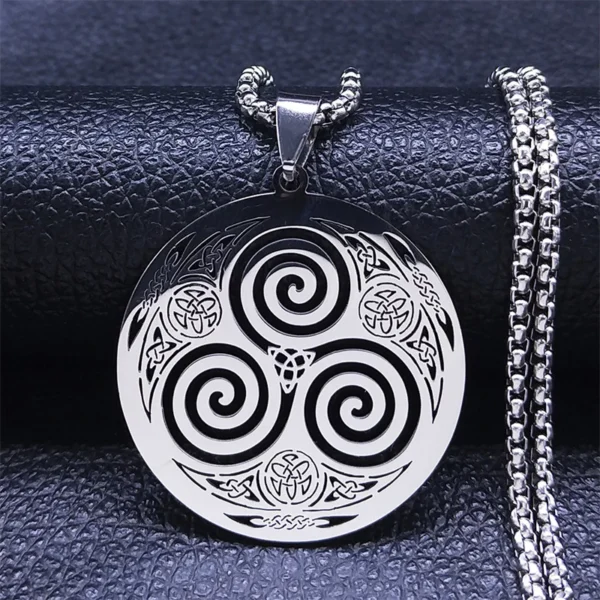
Spirals in threes came back in the Iron Age, on bronze metalwork decorated in the style archaeologists call La Tène, from around 450 BC. The name triskele comes from Greek and means “three-legged”.
The triquetra: three arcs in one line
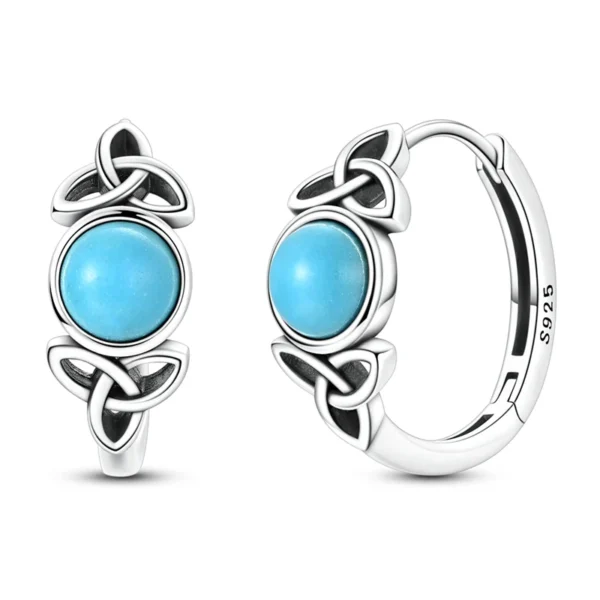
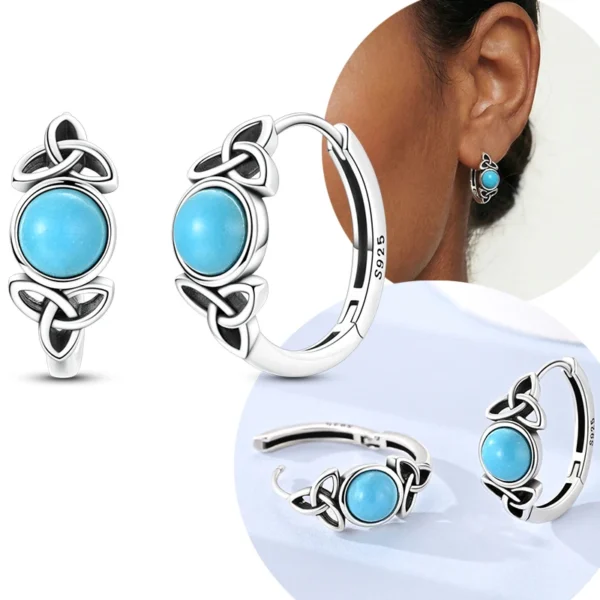
The triquetra is three pointed arcs drawn in one unbroken line, often with a circle woven through them. It appears in the decorated gospel books of Ireland and Britain, such as the Book of Kells from around 800, and on metalwork and carved stones of the same centuries. Similar knots appear on Norse runestones and coins too.
Today it is often called the trinity knot and read as a sign of the Christian Trinity. That reading became popular with the Celtic revival of the 19th century; what the early medieval artists meant by it was not written down.
Knotwork: an art of the monasteries
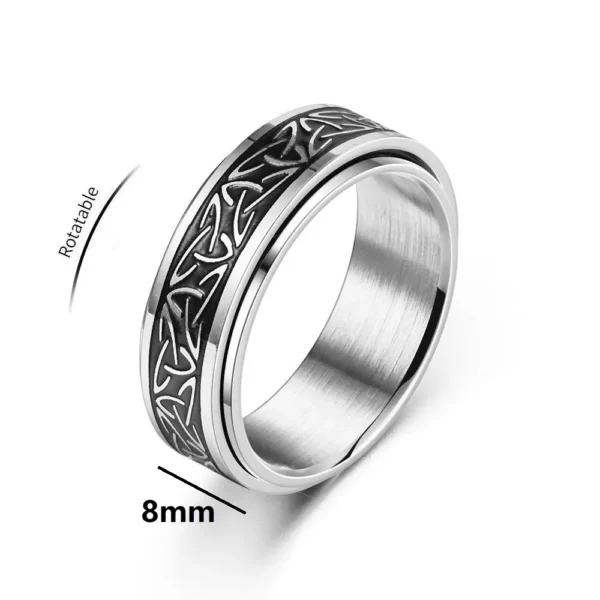
The endless knotwork on our rings and bands goes back to the monasteries of Ireland and Britain in the 7th to 9th centuries: to books such as the Book of Durrow and the Lindisfarne Gospels, and to the high crosses. Its makers took patterns from Roman, Germanic and eastern Christian art and made something of their own.
Much of the knotwork made today owes its method to a Scottish artist, George Bain, who worked out how the old knots were built. His book, Celtic Art: The Methods of Construction, came out in 1951; when it was reissued in 1972 it taught a whole generation to draw them.
The witch’s knot
The witch’s knot on some of our pieces is a simple interlace of four loops, drawn in the same way as the knots above.
Our Celtic pieces
-

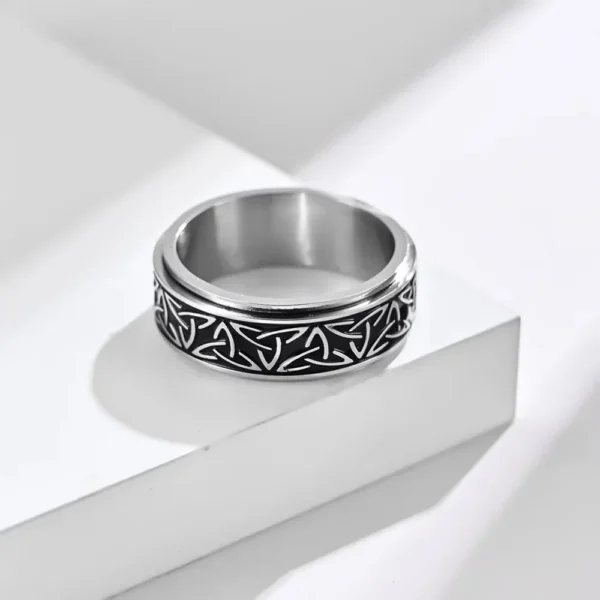
Knotwork spinner ring
19,90 €Price includes VAT where it applies. Business customers can enter a valid EU VAT number at checkout to have VAT removed.
-
Sterling silver trinity knot hoops with blue stone
24,90 €Price includes VAT where it applies. Business customers can enter a valid EU VAT number at checkout to have VAT removed.
-
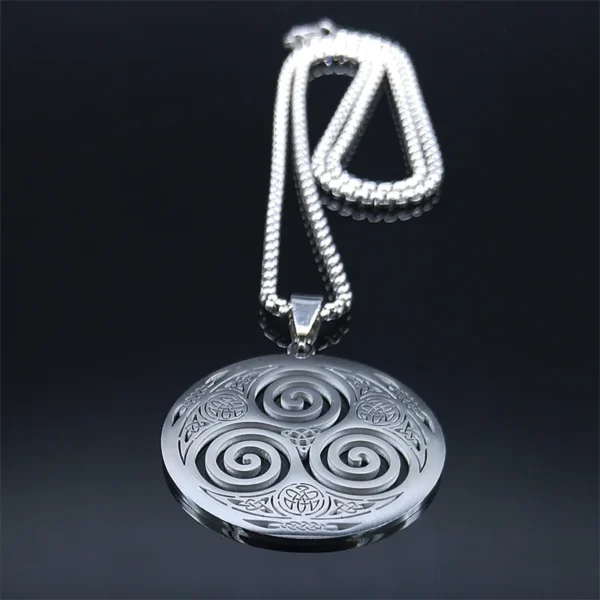
Triskele medallion
24,90 €Price includes VAT where it applies. Business customers can enter a valid EU VAT number at checkout to have VAT removed.
See all our triskele pieces, trinity knot pieces and knotwork pieces.
Sources: Office of Public Works, Brú na Bóinne (Newgrange); the Book of Kells, Trinity College Dublin; George Bain, Celtic Art: The Methods of Construction (1951).