Your bag is empty.
The Vegvísir: an Icelandic sign for finding the way

The Vegvísir is eight arms around a centre, each ending in a different mark. Its name is Icelandic and means “way-shower”: a signpost.
Where it comes from
The Vegvísir is not found on any object from the Viking Age. Its earliest dated drawing is in the Huld manuscript, a book of runic alphabets and magical signs written out by Geir Vigfússon in Akureyri, in the north of Iceland, in the middle of the 19th century. The manuscript is kept today at the National Library of Iceland in Reykjavík.
Next to the drawing, the manuscript says what the sign is for: whoever carries it will not lose their way in storms or bad weather, even when the way is not known.
Signs like this are called galdrastafir, magical staves. Icelanders copied them into small handwritten books for centuries, for practical wishes: a safe journey, a good catch of fish, luck, or catching a thief. Most of these books were written between the 17th and 19th centuries, and they mix old Norse names with Christian prayers and with magic from the rest of Europe.
Not a Viking compass
Because it looks like a compass rose and comes from Iceland, the Vegvísir is often sold as a Viking symbol. There is no evidence for that. The Viking Age ended around 1066, almost eight hundred years before the Huld manuscript was written. The Vegvísir belongs to Icelandic folk tradition, which is a fine story in its own right.
The Vegvísir and the helm of awe
The Vegvísir is easy to confuse with another stave from the same manuscripts, the Ægishjálmur or “helm of awe”. The difference is in the arms. On the Vegvísir each of the eight arms ends in a different mark. On the helm of awe, in its best-known form, all eight arms are the same, each crossed by short bars and ending in a three-pronged fork. The name Ægishjálmur is much older than its drawing: in the Poetic Edda it is a helmet that strikes fear into enemies, worn by the dragon Fáfnir.
What it is worn for today
Today the Vegvísir is worn as a sign of finding your way: on a journey, at sea, or through a change in life. It has become one of the best-known designs from Iceland.
Our Vegvísir pieces
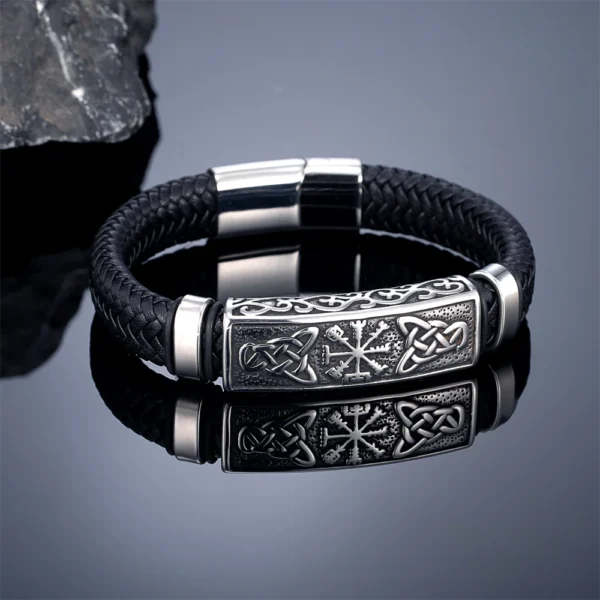
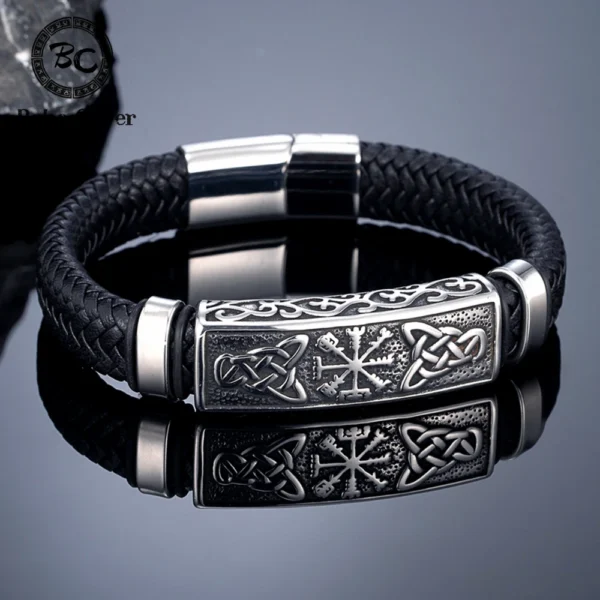
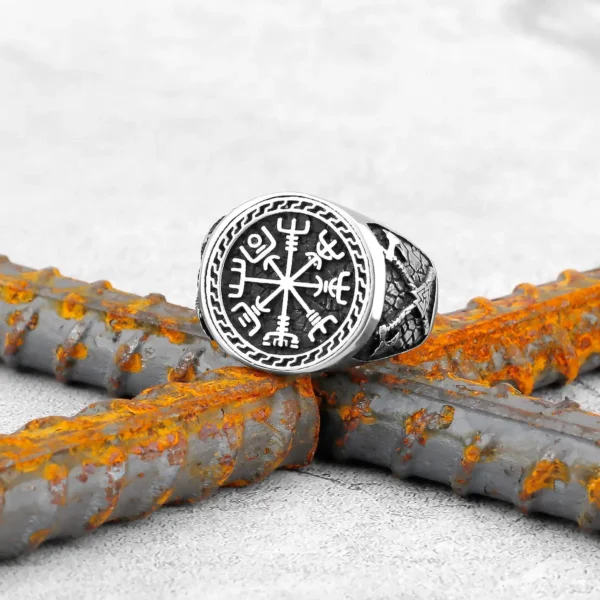
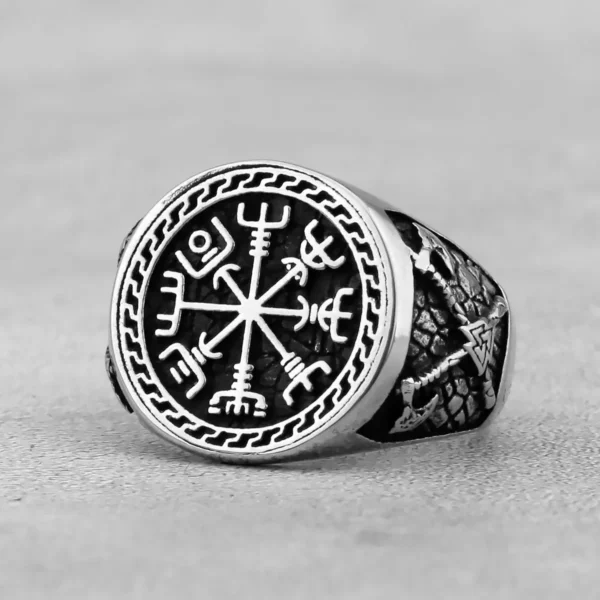
The sign appears on our pendants, rings, cuffs and leather bracelets, sometimes on its own and sometimes framed by runes or knotwork.
-

Vegvísir leather cuff
29,90 €Price includes VAT where it applies. Business customers can enter a valid EU VAT number at checkout to have VAT removed.
-
Vegvísir signet ring
24,90 €Price includes VAT where it applies. Business customers can enter a valid EU VAT number at checkout to have VAT removed.
-
Vegvísir spearhead pendant
34,90 €Price includes VAT where it applies. Business customers can enter a valid EU VAT number at checkout to have VAT removed.
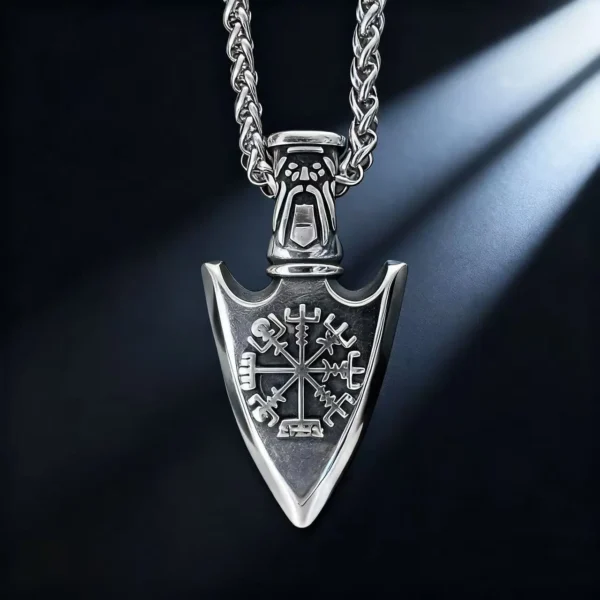

See all our pieces with the Vegvísir
Source: the Huld manuscript (ÍB 383 4to), National Library of Iceland.