Your bag is empty.
Mjölnir: why Thor’s hammer was worn around the neck
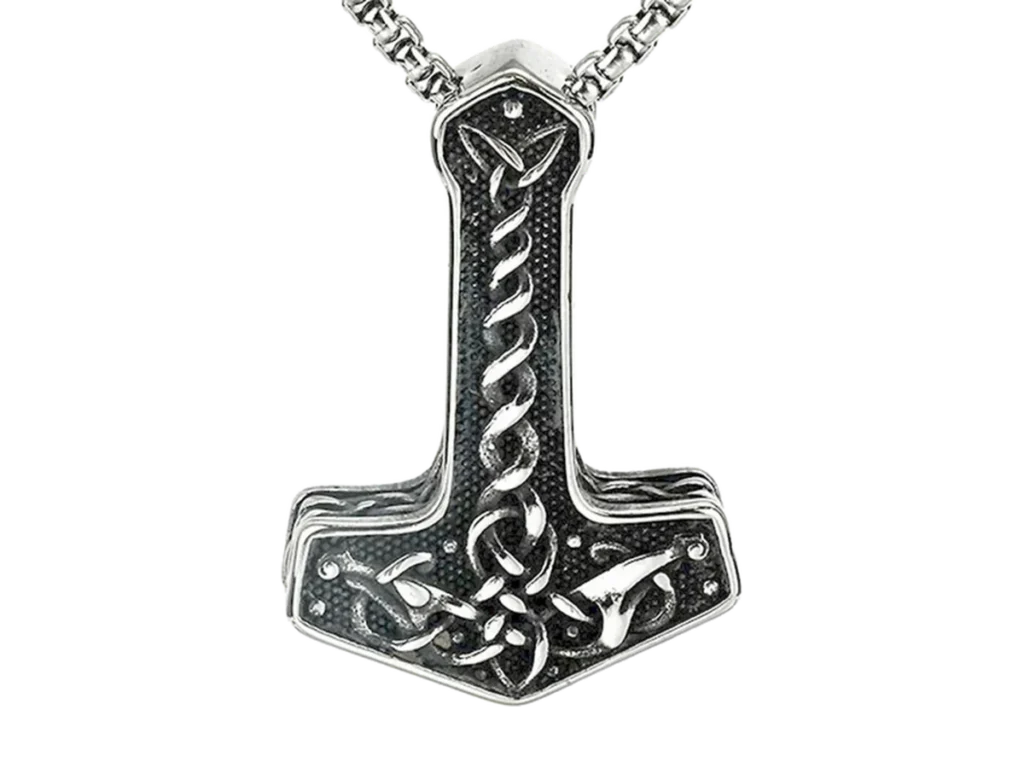
Mjölnir is the hammer of Thor, the Norse god of thunder. Small copies of it are among the best-known objects of the Viking Age, and why people wore them can be read both in the old stories and in what archaeologists have found.
The hammer in the stories
The stories were written down in Iceland in the 13th century, more than a hundred years after the Viking Age, but they draw on older poems. In the Edda that Snorri Sturluson wrote around 1220, two dwarf brothers, Eitri and Brokkr, forge the hammer to win a bet against the god Loki. A fly, usually taken to be Loki in disguise, bites Brokkr on the eyelid while he works the bellows, and the hammer comes out with a single flaw: its handle is short.
In Thor’s hands the hammer protects gods and people from the giants. In the poem Þrymskviða, a giant steals it and will give it back only if the goddess Freyja marries him. Thor goes to the wedding dressed as the bride, and when the giant has the hammer brought in to hallow the bride, Thor takes it back.
The hammers found in the ground
Around a thousand small hammer pendants are known, most of them from the 10th century. They have been found across Scandinavia and as far away as England, the Baltic countries and Russia, with the most in Denmark and southern Sweden. Most are simple shapes in iron or silver; about a hundred are richly decorated. Those found in graves were often in women’s graves.
One hammer, found on the Danish island of Lolland and described in 2014, carries a short runic inscription: hmar x is, “this is a hammer”. It is the only hammer pendant found with runes on it, and strong evidence that these pendants were meant as hammers.
A sign of changing times
Hammer pendants became popular in the same century that Christian crosses spread through Scandinavia. A soapstone mould from Trendgården in Denmark, made in the late 10th century, has room to cast two crosses and a hammer side by side: the same smith made pendants for both faiths.
Historians usually read the hammers as protection; many also see them as a sign of loyalty to the old gods as the new faith arrived.
Our Mjölnir pieces
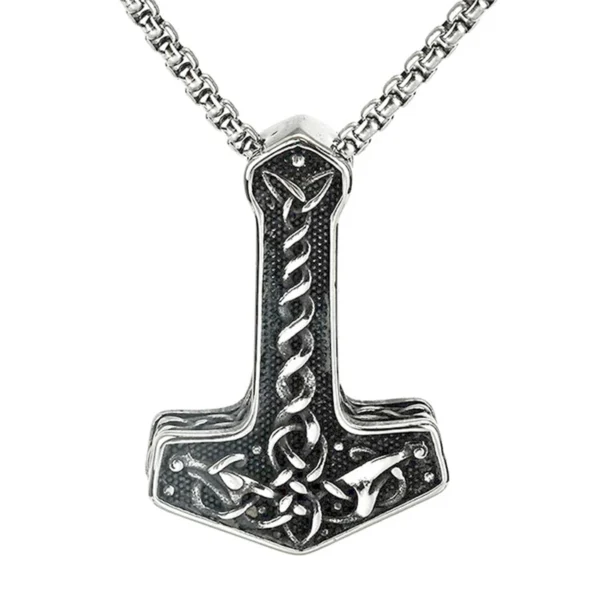
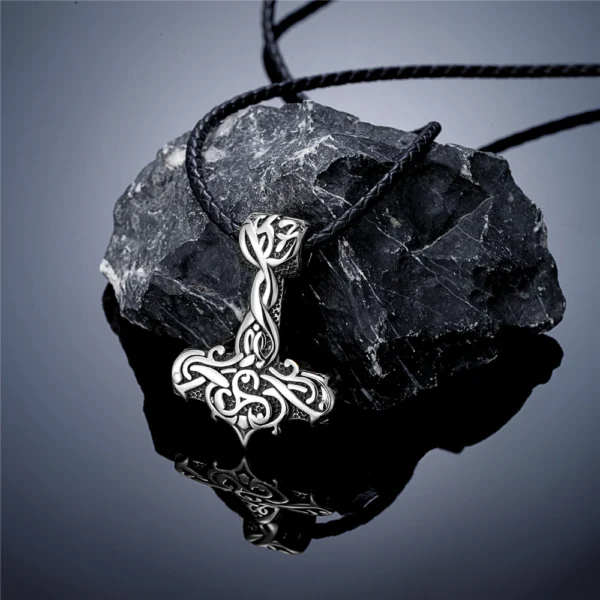
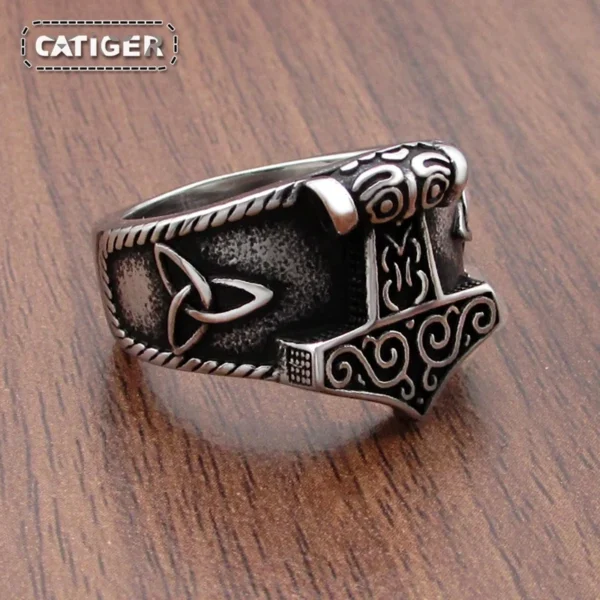
Our Mjölnir pieces keep the short-handled shape of the old finds and add knotwork, runes or a dragon.
-

Knotwork Mjölnir pendant
29,90 €Price includes VAT where it applies. Business customers can enter a valid EU VAT number at checkout to have VAT removed.
-
Mjölnir pendant with runes
29,90 €Price includes VAT where it applies. Business customers can enter a valid EU VAT number at checkout to have VAT removed.
-
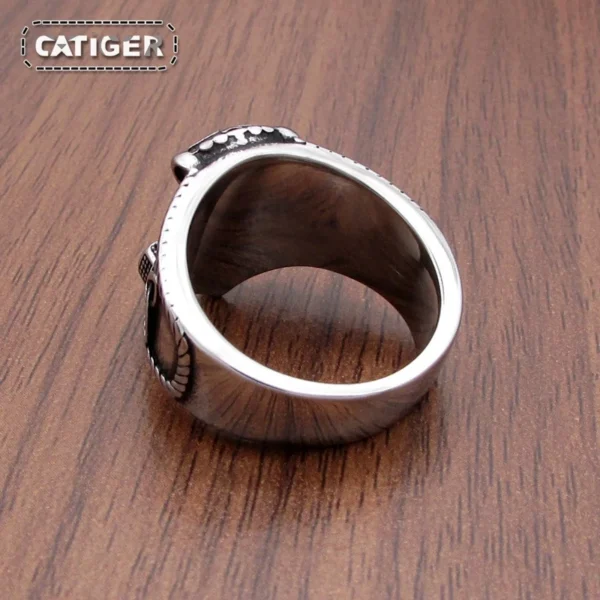
Mjölnir ring
27,90 €Price includes VAT where it applies. Business customers can enter a valid EU VAT number at checkout to have VAT removed.
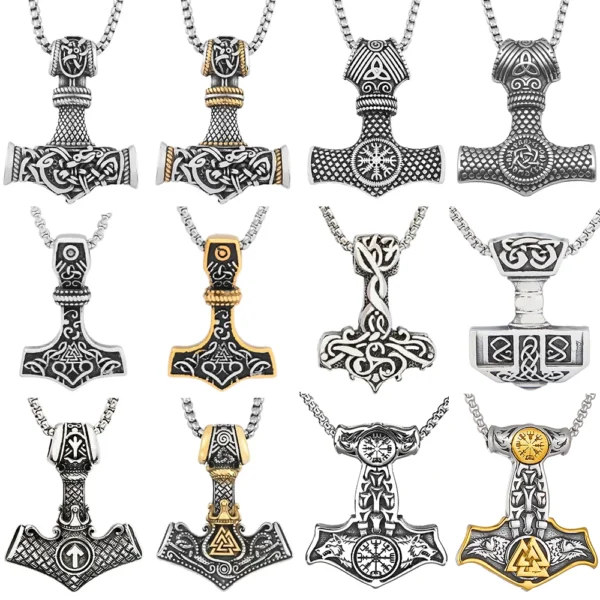
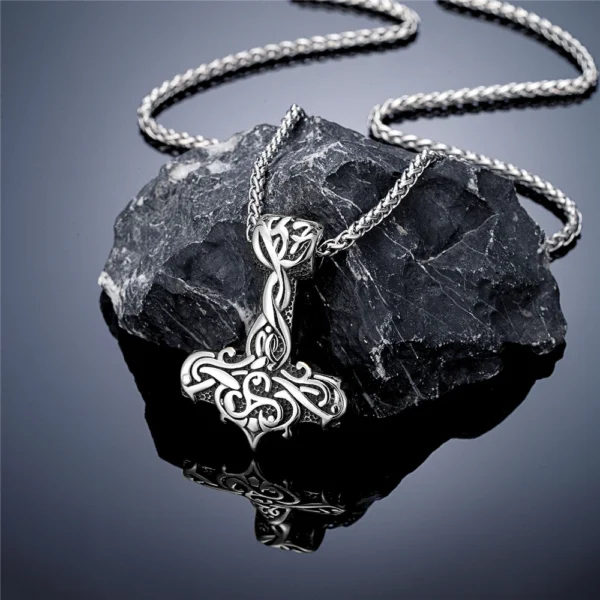
See all our pieces with Mjölnir
Sources: Snorri Sturluson, Edda (Skáldskaparmál); Þrymskviða in the Poetic Edda; the Lolland hammer, Museum Lolland-Falster.